
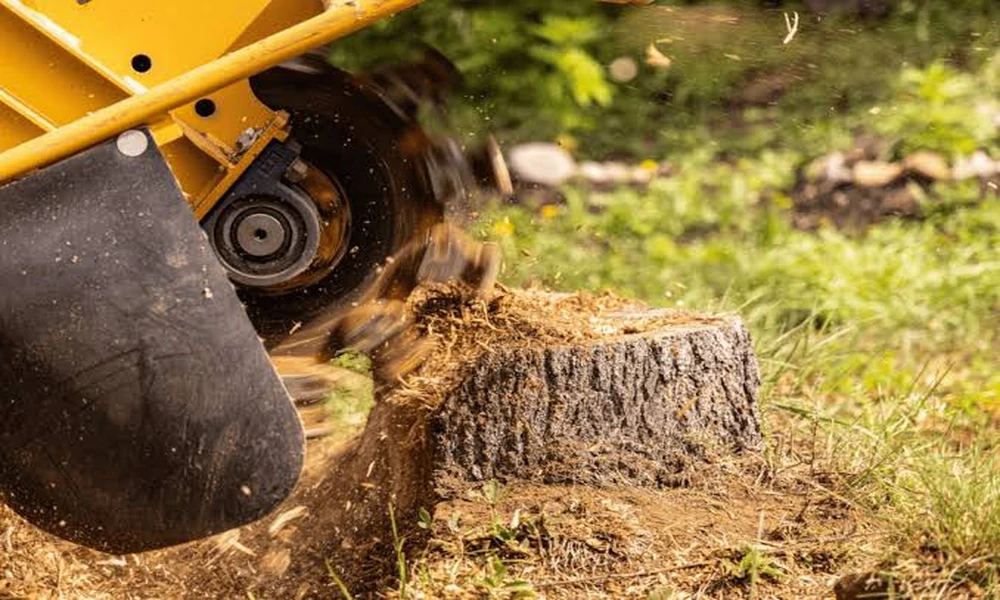
That stump in your yard will still be there in twenty years. Not rotting away into nothing, not sinking quietly into the soil, just sitting there while you mow around it every single Saturday. I’ve watched homeowners plant flowers on top of them, stack firewood around them, and paint them like lawn ornaments, all to avoid the one decision they keep putting off.
Here’s the short answer: grind it. For most yards, grinding costs less than removal, kills the regrowth problem, and gets your mower back on a straight line. The longer answer depends on where the stump sits, what species it is, and how much you care about what replaces it. If you’re in the upstate and want a crew that handles it as part of a wider scope, a service like Stump Grinding in Clemson, SC covers the job alongside the odd extras that come up after a big tree comes down.
What follows is the decision process I’d walk any neighbor through before they spend a dollar on it. You’ll get the honest tradeoffs, the hidden costs nobody mentions at thtrade-offse, and a checklist you can run through in about five minutes.
What actually happens underground after a tree comes down
A stump is a root flare with an entire network still attached. The cut top dries out, but the roots below the soil line keep drawing on stored moisture for years, and on some species they send up suckers, those fast little shoots that turn one stump into a thicket. Species matters here. Maples, willows, and many popular ornamentals are aggressive sprouters. Pines and most oaks are far lazier about it.
Rot happens, just not on your schedule. Softwoods break down faster than dense hardwoods, and moisture speeds the whole process. Temperature and soil organisms do the rest. The U.S. Forest Service, part of the USDA, has documented wood decay for the better part of a century, and the takeaway for a homeowner is simple: plan on a decade or more for a decent sized hardwood stump to become something you can kick apart, not a season or two.
I’d bet most people who “leave it for now” are still mowing around that same stump when they sell the house. Your buyer’s inspector will notice it too.
Grinding, pulling, or leaving it: pick your tradeoff
Three real options exist, and each one charges you in a different currency. Money, mess, or time.
| Option | What you get | What it costs you |
|---|---|---|
| Grinding | Stump reduced below grade, usually 6 to 12 inches deep | Upfront fee, a pile of chips, a shallow depression to fill |
| Full removal | Root ball and stump gone entirely | Heavy equipment, torn turf, much bigger invoice |
| Leave it | Nothing changes today | Sprouts, mower damage, a lawn feature you didn’t ask for |
Grinding wins on value for almost everyone. A machine chews the stump down below the soil surface so you can fill the hole with topsoil and seed it or drop a new tree a few feet away. The chips make decent mulch if you let them age, though I wouldn’t spread fresh chips from a diseased tree around your prized beds.
Pulling makes sense in narrow cases: a stump right against a foundation, a species known for invasive roots near a sewer line, or a spot where you’re pouring a patio and can’t tolerate settling soil. Otherwise you’re paying for a crater and a repair bill for the lawn.
Leaving it is fine if the stump lives deep in a wooded back corner where nobody walks. That’s the one scenario where I’d tell you to save your money.
How the grinding day actually goes
Good crews do this in a predictable order, and knowing it helps you prepare. The machine comes in on wheels or tracks, and access is the first thing that decides the price. A gate under three feet wide, a fence, a parked car, a steep slope, or a septic field in the path all change the job. Send a photo of the route when you book and you’ll get a more honest number the first time.
Then the operator sweeps the cutting wheel across the stump, working it down in passes. Expect noise, flying debris, and a safety perimeter. Chips pile up beside the hole. Most outfits ask whether you want them hauled away or left, and leaving them is nearly always cheaper. The stump cavity gets backfilled or left for you, depending on the contract, so ask which one you’re buying.
One more thing worth raising before anyone starts cutting: utility locates. Any contractor working near buried lines should follow the excavation and locate standards that the Occupational Safety and Health Administration sets out for underground utilities. A lawn stump is rarely on top of a gas line, but the conversation takes ten seconds and it tells you whether your crew runs a tight operation.
A five-minute checklist before you book anyone
- Measure the stump across at the widest point and note how high the cut sits. Both drive the price.
- Walk the machine’s path from street to stump and count every obstacle.
- Ask how deep they grind. Anything above six inches below grade leaves you a mowing hazard.
- Confirm who handles cleanup, backfill, and chip disposal in writing.
- Ask whether they carry liability coverage and can show the certificate.
That list filters out the lowball bids fast. The cheapest quote usually assumes a clean, wide-open access point and a stump the size of a dinner plate. Anything else becomes a change order in the driveway, which is a rotten way to start a Saturday.
While you’re at it, look at what else the site needs. A tree that lost a big limb may want cabling or bracing to hold its structure. A prized specimen near the house might justify lightning protection. If a crew is already on your property for the stump, bundling those jobs saves a trip charge and gets you a second opinion on the standing trees at the same time.
What to do with the hole afterward
Don’t rush to plant in the raw grindings. Fresh chips tie up nitrogen as they break down, and a new sapling dropped straight into them tends to sulk. Scoop out most of the debris, backfill with real topsoil, and let it settle through a rain or two before you seed or plant. I’d wait a full season before putting anything with a real root system in that spot, and if the old tree came down from disease, pick a different species or a resistant cultivar.
Cooperative Extension offices run by land grant universities, gathered under the Extension Foundation, publish region-specific planting and soil guidance that beats any generic advice online. Your county agent will tell you what grows well on your exact soil type, and that call is free.
Then watch the spot for a season. Stumps that produced suckers before grinding can throw a few more from surviving roots. A quick mow handles them, and most of the time that’s the end of it.
The call I’d make
For a stump anywhere near the house, the driveway, or a lawn you actually mow, grinding is the move. You’ll spend more than you want and less than full removal, and you’ll get your yard back without a decade of waiting on nature to cooperate. Leave the deep-woods stumps alone and put the savings toward the ones that bother you.
Get two quotes, ask the depth question, and check the access path before anyone shows up with equipment. Then go stand in the yard and pick your new tree. What’s the stump in your yard actually costing you, in Saturday minutes and mower blades, every mowing season?