
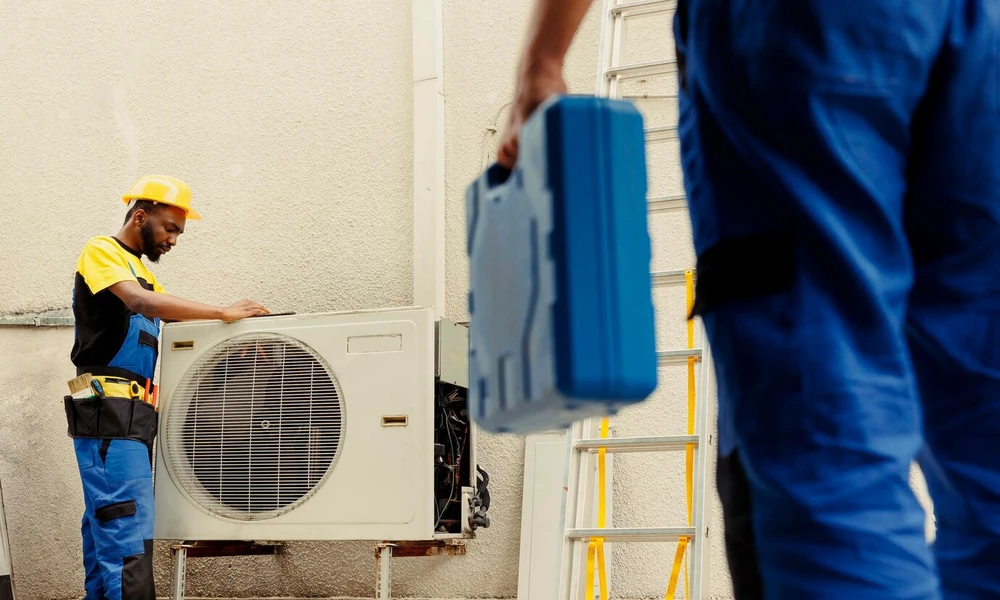
Your AC breaks down on a 94-degree Sarasota afternoon, and the repair tech quotes you $1,400. You pay it. Two summers later, he’s back with a new quote for $1,200. At some point, every Florida homeowner hits this crossroads: keep patching a dying system, or pull the trigger on a replacement. The wrong call costs thousands. These five signs will tell you when the system is genuinely past saving, and when you’re better off cutting your losses now.
Why Florida is the Hardest Place in the Country to Run an Old AC
Florida doesn’t give your cooling system a break. The state runs its air conditioners almost continuously from April through October, and in places like Bradenton and Sarasota, “almost” is generous. Compare that to a home in Ohio that runs AC maybe three months a year, and you can see why the math on system lifespan looks different here.
The salt air along Florida’s Gulf Coast compounds the problem. Coastal humidity attacks condenser coils, corrodes electrical contacts, and degrades refrigerant lines faster than any landlocked climate. A system that might last 18 years in Atlanta could hit the wall in 12 years on Longboat Key. Your system’s age is always relative to how hard it’s worked, not just how many calendar years it has accumulated.
According to the U.S. Energy Information Administration’s 2020 Residential Energy Consumption Survey, 96% of Florida households used air conditioning, with 90% relying on a central air unit as their primary cooling method. That statistic matters because central systems bear the full load of keeping an entire home comfortable, and no component in a heavily used central system ages gracefully without consistent maintenance.
The Repair-or-Replace Triangle: A Simple Framework
Before running through each warning sign, use this three-point check. If your system hits two of these three conditions at once, replacement is almost certainly the smarter financial move:
- Age: The system is 12 or more years old.
- Cost: The repair estimate exceeds 40% of what a new comparable system costs installed.
- Pattern: This is the second or third significant repair within 36 months.
One condition alone might justify a repair. Two conditions is a strong signal to replace. All three, and you’re spending money to delay the inevitable by months, not years.
Sign 1: The System Has Crossed Its Useful Life Threshold
A central air conditioner running in Florida’s climate typically delivers 12 to 15 years of reliable performance. After that, efficiency drops, components become harder to source, and the probability of a major failure in any given summer climbs sharply.
If your system is older than 12 years and you’re calling for repairs, ask yourself: even if this fix works perfectly, how many more summers will the compressor realistically last? Compressor replacement alone often costs more than half the price of a new unit, and most technicians won’t warranty a new compressor dropped into an aging, worn-out system. You’d essentially be buying an expensive part for a host that can’t protect it.
Sign 2: Your Energy Bills Climb Without a Reason
A gradual rise in your electric bill, unrelated to a rate hike or new appliances, is one of the earliest signals of a system in decline. Aging compressors lose efficiency before they fail outright. Refrigerant charge drifts low over time, making the unit work far longer to achieve the same cooling. Dirty coils force the motor to run harder for every degree of temperature drop.
Pull up three years of summer utility bills and compare June or July across each year, controlling for obvious changes. A meaningful upward trend with no lifestyle explanation is your AC quietly asking you to replace it.
Sign 3: The Refrigerant Is R-22
If your system still runs on R-22 refrigerant (often called Freon), you’re operating equipment that the U.S. government phased out of production. R-22 is no longer manufactured domestically, which means any refrigerant a tech adds to your system comes from recycled or imported stock at a significant premium.
A leak in an R-22 system isn’t just a repair, it’s a recurring expense with no ceiling. The cost to recharge can rival a significant portion of a new system’s price, and it solves nothing permanently. Any system still running R-22 is almost certainly old enough to meet the age threshold above.
Sign 4: The System Fails to Hold Consistent Temperatures
Walk through your home on a hot afternoon. Is one room noticeably warmer than another? Does the thermostat read 74 but certain areas feel closer to 80? Uneven cooling is sometimes a ductwork issue, and sometimes a zoning fix can resolve it. But in an older system, it usually signals a compressor or coil problem.
“Installation quality edges out everything else. A correctly sized system with proper refrigerant charge, matched components, and adequate return ductwork will outlast a premium-brand system installed poorly.” — AC Direct, citing ASHRAE and AHRI service life data
That point cuts both ways. If your current system was poorly installed from day one, it might be failing ahead of schedule, and the right replacement, installed properly this time, could give you significantly more reliable years than you’ve gotten out of the old one.
Sign 5: Repair Frequency Has Accelerated
One repair every five or six years is normal wear. One repair per summer is a system in collapse. When the pattern accelerates, it’s because multiple components are aging simultaneously. Fixing one doesn’t freeze the others in time; it just shifts where the next failure shows up.
Track your service history honestly. If you’ve had two or more paid service calls in the past three years beyond routine maintenance, that pattern is your answer. You’re not unlucky. The system is telling you it’s done.
What to Do When the Signs All Point to Replacement
Once you’ve accepted that a replacement is coming, the decision shifts to timing. Here’s a practical checklist:
- Get a load calculation done, not just a “same size as the old one” quote. An incorrect system size is one of the most common causes of premature failure.
- Confirm the installer will inspect existing ductwork before connecting a new unit. Leaky or undersized ducts quietly crush efficiency from day one.
- Ask specifically about SEER2 ratings. Newer minimum efficiency standards apply to systems sold after January 2023, and the right rating for a Florida climate is worth discussing with your technician.
- Plan the replacement before a breakdown, not during one. Emergency installs under time pressure rarely go as carefully as planned ones.
This is exactly where working with an established local contractor pays off. Anthony’s expert HVAC installation team serves Bradenton and Sarasota homeowners with a focus on correct sizing and proper installation, the two variables that matter most to long-term system performance.
According to U.S. Census Bureau data reported by WGCU in July 2026, approximately 8.7 million Florida households have access to air conditioning. That’s a massive installed base of systems at various stages of their lifecycle, and a huge portion of them are creeping toward the replacement zone right now.
The Bigger Picture
Repair bills feel smaller than replacement costs in the moment. That’s a real psychological pull, and it’s exactly the trap that keeps homeowners pouring money into a system with two or three summers left in it. Run the math once, clearly, using the Repair-or-Replace Triangle above. If the numbers point toward replacement, the sooner you move, the more control you have over the timing, the contractor, and the choice of equipment. Waiting for the system to die on its own in July just means paying more for less say in the outcome.